
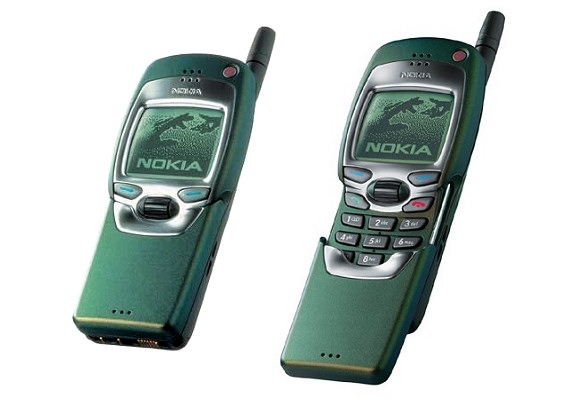
From The Economist, 14 October 2000: “The wireless gamble”
In the past, the press imagined a future that looks nothing like the world we’re living in today. Future Tense isn’t about mocking old mistakes. It’s about looking at the space between what was promised and what actually happened. By diving back into these old headlines, I want to spark that stay amazed every daycuriosity, because having an optimistic, open mind about what’s possible is the first step toward shaping what comes next.
The Most Expensive Hunch in History
In October 2000, The Economist published a leader that dripped with scepticism. European telecoms companies were in the middle of what the magazine called “the biggest gamble in business history”: spending over $300 billion to marry the mobile phone with the internet. Roughly half of that went to governments for 3G spectrum licences. Germany alone pulled in nearly €51 billion. Britain, £22.5 billion. The other half would go to building the networks themselves. And nobody knew if consumers would actually want what was on offer.
Investors were getting nervous. Shares in major operators were tumbling. Deutsche Telekom, France Telecom, British Telecom all suffered credit-rating downgrades. Telecom bonds were trading at far wider spreads than other corporates. The money was going out the door and nothing convincing was coming back in.
The Paper Straw
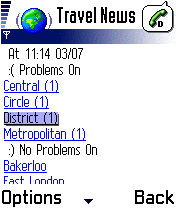
The industry’s best pitch for the mobile internet was WAP, a technology introduced in 1999 that delivered the web in roughly the way a paper straw delivers a milkshake. Slow, frustrating, and leaving you wondering why you bothered. The Economist noted that WAP had attracted a mere 2 million frequent users, not the 10 million the industry had confidently predicted. Even Jorma Ollila, the boss of Nokia, conceded that the business was entering “uncertain waters.” The Economist’s argument was more nuanced than simple dismissal. The magazine acknowledged that 3G would eventually make WAP look clunky.
The Petrol Station Problem
The real issue was the business case. Operators claimed that “killer applications” would emerge from services that exploited what was unique about the mobile phone: it is always with you. Location-aware information, personalised updates, electronic wallets. The Economist was having none of it.
“Simply reciting such mantras as ‘you can never have too much bandwidth’, or ‘if you build it, they will come’, is no substitute for a credible business plan.”
Their killer example: how much would you really pay to be guided to the nearest petrol station? Something, certainly, but perhaps not very much. And the money might go to the service provider, not the network operator. Low-value services didn’t need 3G bandwidth anyway. So what would justify the investment?
Fair point in 2000. Less fair now, when that exact location-aware capability underpins a hundred billion-dollar industries, from food delivery to ride-hailing to the map app you used to find that petrol station. The Economist judged the technology by its first draft. The first draft was terrible. But the bet wasn’t on WAP. It was on the idea that people would want information in their pocket. The execution caught up.
The Gamble That Paid Off
Twenty-five years on, the verdict is in. The optimists won. Not cleanly, not without casualties, and not on the timeline anyone predicted. But they won.
We carry the internet in our pockets and it has genuinely improved daily life in ways the sceptics couldn’t imagine. You can finish a proposal from a café in Lisbon. Video-call your parents from a train in Bavaria. Check whether your football team is holding on to that narrow lead while sitting on a beach in Crete. Navigate a foreign city without once unfolding a paper map. Split a bill, book a flight, learn a language, translate a menu, all from the device that The Economist thought might struggle to sell you directions to a petrol station.
Yes, the burden of connectivity is real. Screen time anxiety, digital detox retreats, the slow erosion of uninterrupted attention. Those costs matter and they shouldn’t be waved away. But the balance sheet is overwhelmingly positive. The mobile internet didn’t just meet demand. It created possibilities that didn’t exist before, and most of them turned out to be worth having.
The pattern here matters more than the specific technology. Smart, well-informed people looked at a clumsy first version of the future and concluded it wouldn’t work. They were wrong because they evaluated the promise using only the evidence in front of them. The evidence in front of them was a paper straw. The future was a fire hose.
Your Organisation’s Wireless Gamble
Here is the uncomfortable part. Your organisation could be making the same mistake right now, just about a different technology. AI. Remote work. New market positioning. Digital transformation. Whatever the change is, it looks messy and uncertain in its current form. The business case has holes. The first draft is underwhelming. The smart people around you are sceptical, and they have good reasons.
Those reasons are probably as solid as The Economist’s petrol station argument. Which is to say: they are completely rational, based on available evidence, and likely to be proven wrong within a decade.
The organisations that thrived after the wireless gamble weren’t the ones that sat it out. They were the ones that engaged early, asked better questions, and positioned themselves before the evidence became obvious to everyone. Vodafone used its financial muscle to clear advantage. NTT DoCoMo’s i-mode proved that consumers would embrace mobile data if you gave them something worth using. The winners didn’t wait for certainty. They moved while the picture was still blurry.
Turn Uncertainty Into Advantage
That is exactly what stay amazed every day helps organisations do. Not predict the future. Nobody can. But engage with change while it is still uncomfortable, formulate the right questions, and build a strategy that works even when the first draft disappoints. Through keynotes that reframe how your team sees what is coming, and workshops that turn uncertainty into a concrete roadmap, the focus is always the same: don’t judge the future by its first draft.
The Wireless Gamble taught us that the people who bet on change usually win. The people who bet against it usually write very persuasive articles about why it won’t work, and then quietly revise their position later.
Which side of that bet do you want to be on?