
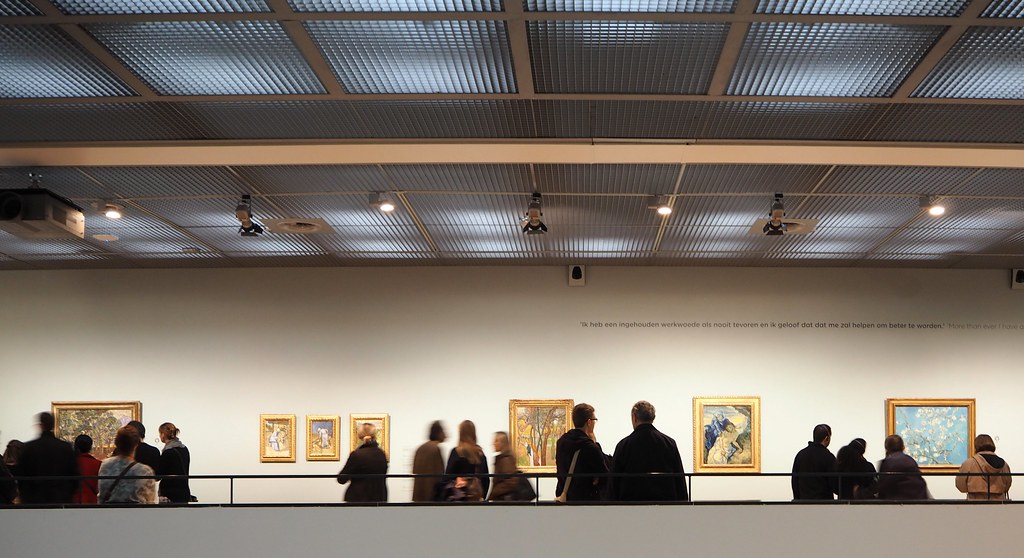
Amsterdam’s Van Gogh Museum gave researchers access to data from 1,5 million visits between 2019 and 2021. Not website analytics. Physical movement data logged by the multimedia guides visitors carry through galleries. Every stop, skipped room, and exit is recorded.
From 25.000 sampled visits, they built a model predicting which artworks you’ll reach (81% accuracy) and when you’ll leave (96% accuracy). They call it a “pathway multinomial logit model”. Essentially a mathematical map of how crowds flow, where they get stuck, and what layout changes keep them looking longer. The museum hasn’t physically rearranged anything yet. Researchers ran simulations showing that simply moving crowd favorites away from “leaky spots” (stairs, elevators) would get visitors to see more art. A follow-up study (2022 to 2024) tweaked multimedia guides with “digital nudges” to fight fatigue and information overload.
Here is my concern. When a museum knows you’ll leave at 14:47 o’clock and can nudge you to 15:15, your visit stops being yours. The model optimizes for the average visitor. “What works for most” and “what surprises or moves you” are often opposites. Blockbuster shows pull crowds, but quiet rooms with lesser-known works sit empty. Give curators data quantifying exactly how empty, and guess which room gets cut next. The museum calls it a “personalised experience,” but in practice it’s a prefab route designed to maximize engagement metrics, not curiosity.
But there is genuine potential if the right people hold the reins. Flip the model: instead of pushing top paintings everywhere, use it to figure out why nobody finds lesser-known works, then deliberately route visitors past them. Education departments could understand why students disengage halfway through a visit and build better programs.
The technology is neutral. The question is whether institutions use it to flatten experience or amplify discovery. Will museums keep taking risks and leaving space for the unexpected, or optimize until every visit feels identical?
That is the real curatorial decision. You cannot outsource it to a model.
After 25 years consulting across culture, education, and retail, I’ve learned this: data shows you where people go. It never tells you where they want to go. If you are grappling with these kind of questions in your organisation, let’s talk.

Written by Krispijn Plettenberg. AI tools were used for editing and refinement.