

Tech built to unplug
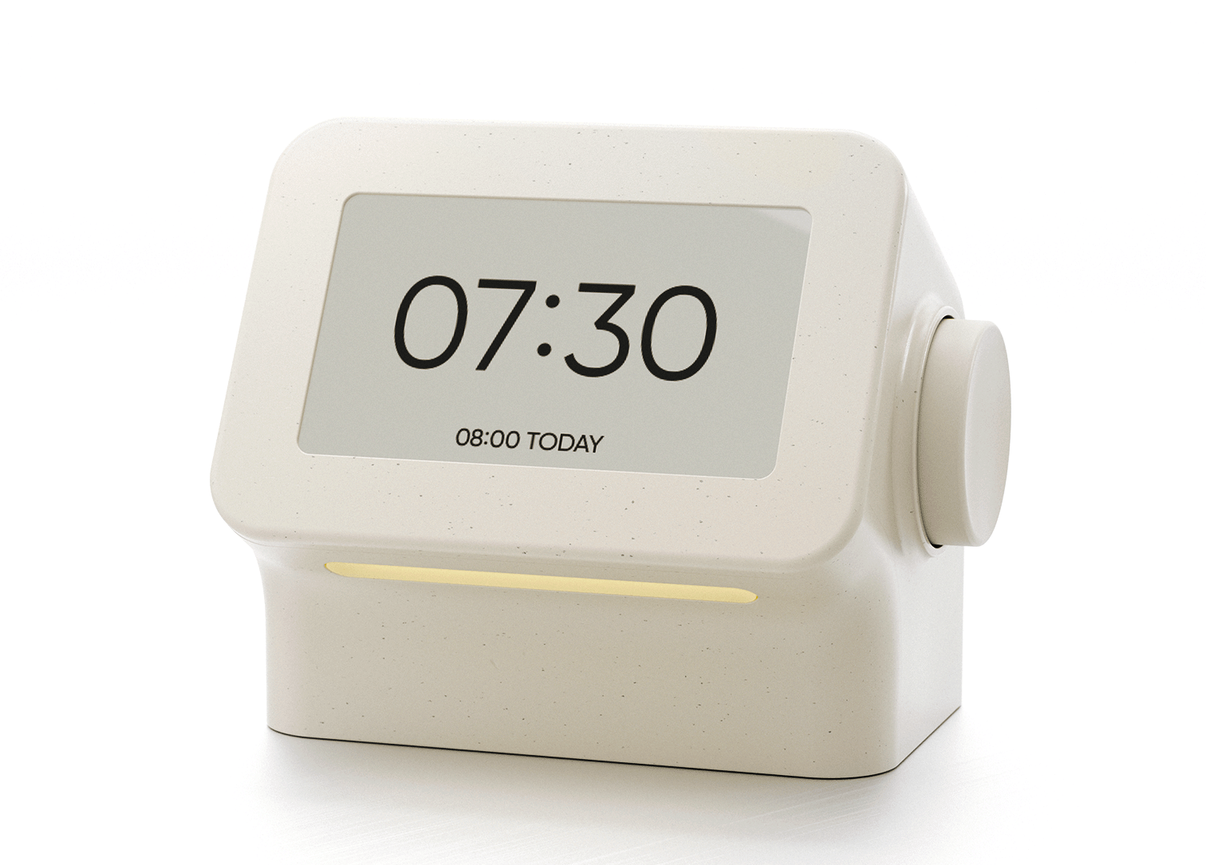
There’s a strange irony at play: tech companies are now building hardware to save us from our hardware. New Atlas recently highlighted two products doing exactly that. Commodore, the brand that defined a generation of 1980s bedroom coders, is introducing the Callback 8020, a flip phone that blocks social media and web browsers. Their pitch: no more doomscrolling. Habity, a Copenhagen design studio, sells a bedside clock with an e-paper display and ambient sounds. Their pitch: less scrolling, more dreaming. Founder Peter Arvad put it bluntly: “Too much phone, too little sleep.”
Strategic Friction by Design
Both products share a design philosophy worth paying attention to. Commodore calls the Callback a “not dumb dumbphone,” a middle ground between a smartphone that’s too smart and a feature phone that’s too bare. Habity deliberately left out sleep tracking because, as Arvad told New Atlas, scoring and gamifying sleep would create an unhealthy relationship with something meant to feel natural. Neither product locks you down. They introduce friction where friction was deliberately removed. That’s a design choice, and a smart one.
Restoring Intent in the Workplace
I love gadgets, and I’m averse to products that limit my options based on someone else’s choices. But here’s what caught me: the most predatory apps on your phone are engineered by people who understand behavioral psychology better than most therapists. They removed every possible friction point to keep you swiping. When a company like Habity or Commodore puts some of that friction back, they’re not being retrograde. They’re restoring a choice that was taken from you so gradually you didn’t notice. In my change consultancy work, I see organisations grapple with the same tension: adopting powerful tools without being consumed by them. That conversation, about when more tech is the answer and when less is, is one I’m happy to bring to your team.
Sources: Retro e-paper alarm clock puts kibosh on late-night phone scrolling, and Going retro: Commodore strips the smartphone back to essentials (New Atlas)

Written by Krispijn Plettenberg. AI tools were used for editing and refinement.